

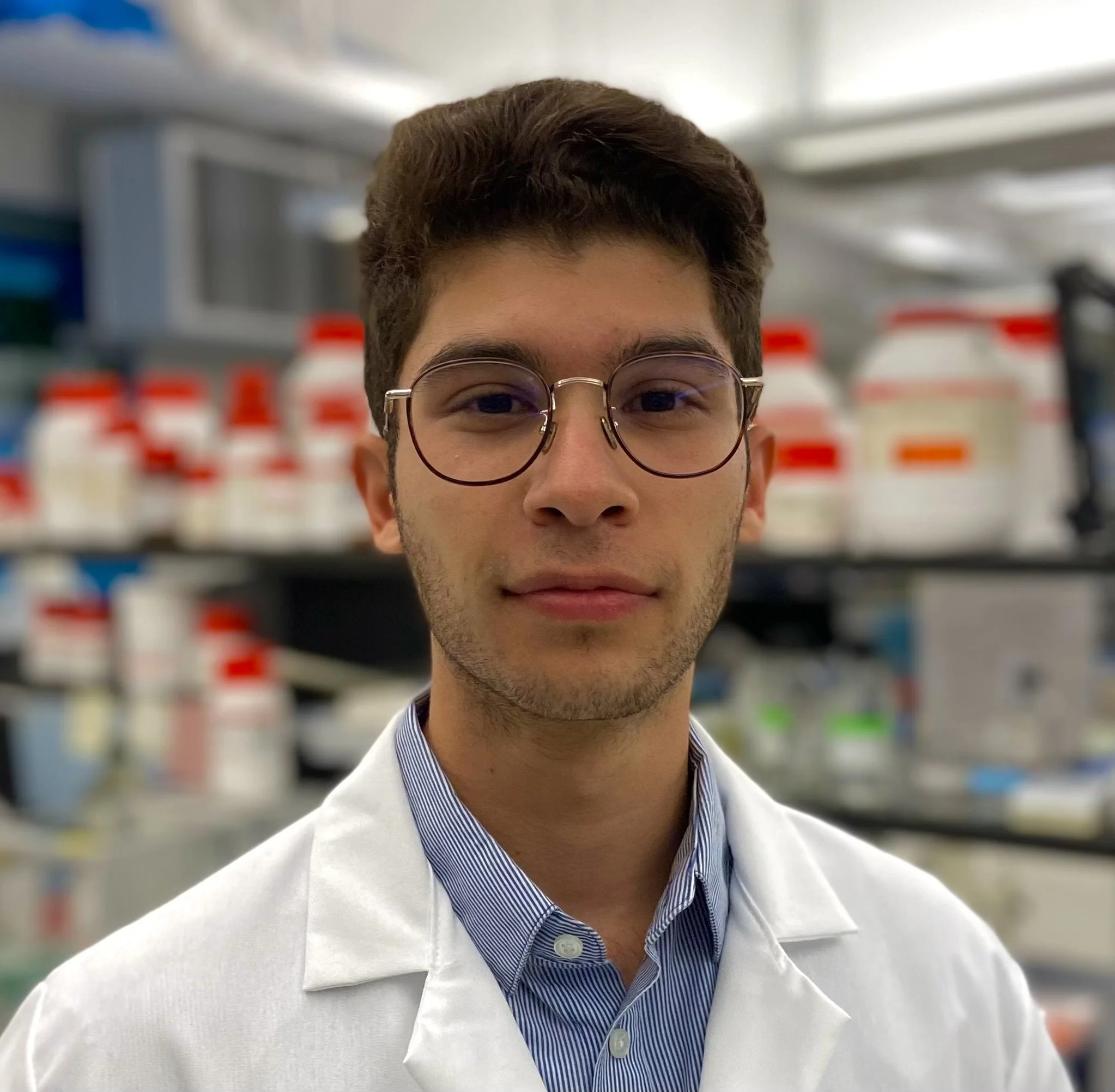
Andy Garcia was awarded a National Science Foundation (NSF) Graduate Research Fellowship for his proposal titled "Multiphasic Modeling of Synovium Structure-Function Relationships.”
Congratulations, Andy!
Andy Garcia was awarded a National Science Foundation (NSF) Graduate Research Fellowship for his proposal titled "Multiphasic Modeling of Synovium Structure-Function Relationships.”
Congratulations, Andy!
Neeraj Sakhrani and Co-Authors publish research article in Frontiers of Bioengineering and Biotechnology, section Tissue Engineering and Regenerative Medicine, titled “Toward Development of a Diabetic Synovium Culture Model.” Co-Authors include: Andy J. Lee, Lance A. Murphy, Hagar M. Kenawy, Christopher J. Visco, Gerard A. Atehsian, Roshan P. Shah, and Clark T. Hung.
Congratulations, everyone!
Abstract: Osteoarthritis (OA) is a degenerative joint disease characterized by articular cartilage degradation and inflammation of synovium, the specialized connective tissue that envelops the diarthrodial joint. Type 2 diabetes mellitus (DM) is often found in OA patients, with nearly double the incidence of arthritis reported in patients with diabetes (52%) than those without it (27%). The correlation between OA and DM has been attributed to similar risk factors, namely increasing age and joint loading due to obesity. However, a potential causative link is not well understood due to comorbidities involved with treating diabetic patients, such as high infection rates and poor healing response caused by hyperglycemia and insulin resistance. The purpose of this study was to investigate the effect of hyperglycemic and insulin culture conditions on synovium properties. It was hypothesized that modeling hyperglycemia-induced insulin resistance in synovium would provide novel insights of OA pathogenesis in DM patients. To simulate DM in the synovial joint, healthy synovium was preconditioned in either euglycemic (EG) or hyperglycemic (HG) glucose concentrations with insulin in order to induce the biological response of the diseased phenotype. Synovium biochemical composition was evaluated to determine ECM remodeling under hyperglycemic culture conditions. Concurrent changes in AKT phosphorylation, a signaling pathway implicated in insulin resistance, were measured along with gene expression data for insulin receptors, glucose transporters, and specific glycolysis markers involved in glucose regulation. Since fluid shear stress arising during joint articulation is a relevant upstream stimulus for fibroblast-like synoviocytes (FLS), the predominant cell type in synovium, FLS mechanotransduction was evaluated via intracellular calcium ([Ca2+]i). Incidence and length of primary cilia, a critical effector of cell mechanosensing, were measured as potential mechanisms to support differences in [Ca2+]i responses. Hyperglycemic culture conditions decreased collagen and GAG content compared to EG groups, while insulin recovered ECM constituents. FLS mechanosensitivity was significantly greater in EG and insulin conditions compared to HG and non-insulin treated groups. Hyperglycemic treatment led to decreased incidence and length of primary cilia and decreased AKT phosphorylation, providing possible links to the mechanosensing response and suggesting a potential correlation between glycemic culture conditions, diabetic insulin resistance, and OA development.
Andy Garcia presented research at the 10th Annual Musculoskeletal Repair and Regeneration Symposium hosted by Albert Einstein College of Medicine and Montefiore Medical Center. His poster titled “Mimicking Benninghoff Arches in Cartilage Tissue Engineering for Improved Mechanics” was awarded the Young Investigator Award in Basic Science as the best research presentation in the predoctoral research category.
Congratulations, Andy!
Lianna Gangi publishes article in the Journal of Visualized Experiments titled “A Friction Testing-Bioreactor Device for Study of Synovial Joint Biomechanics, Mechanobiology, and Physical Regulation.”
Abstract: In primary osteoarthritis (OA), normal 'wear and tear' associated with aging inhibits the ability of cartilage to sustain its load-bearing and lubrication functions, fostering a deleterious physical environment. The frictional interactions of articular cartilage and synovium may influence joint homeostasis through tissue level wear and cellular mechanotransduction. To study these mechanical and mechanobiological processes, a device capable of replicating the motion of the joint is described. The friction testing device controls the delivery of reciprocal translating motion and normal load to two contacting biological counterfaces. This study adopts a synovium-on-cartilage configuration, and friction coefficient measurements are presented for tests performed in a phosphate-buffered saline (PBS) or synovial fluid (SF) bath. The testing was performed for a range of contact stresses, highlighting the lubricating properties of SF under high loads. This friction testing device can be used as a biomimetic bioreactor for studying the physical regulation of living joint tissues in response to applied physiologic loading associated with diarthrodial joint articulation.
Video coming soon! Below are behind the scenes photos of Lianna Gangi and co-author Courtney Petersen (Musculoskeletal Biomechanics Laboratory, Columbia University)
Gabriella Bond will join CEL lab in Fall 2022. She will be co-advised by Dr. Clark Hung and Dr. Nadeen Chahine.
Welcome, Gigi!

Maria Nuñez presented her summer research titled “Testing the effects of β-estradiol on Canine Chondrocytes and Tissue Engineered Cartilage Constructs” at Columbia’s SURF Symposium.
Maria is advised by graduate student Hagar Kenawy. Nice work, Maria!
Dr. Clark Hung and Matthew Pellicore publish review article in the International Journal of Molecular Sciences titled “Biophysical Modulation of Mesenchymal Stem Cell Differentiation in the Context of Skeletal Repair”
Abstract: A prominent feature of the skeleton is its ability to remodel in response to biophysical stimuli and to repair under varied biophysical conditions. This allows the skeleton considerable adaptation to meet its physiological roles of stability and movement. Skeletal cells and their mesenchymal precursors exist in a native environment rich with biophysical signals, and they sense and respond to those signals to meet organismal demands of the skeleton. While mechanical strain is the most recognized of the skeletal biophysical stimuli, signaling phenomena also include fluid flow, hydrostatic pressure, shear stress, and ion-movement-related electrokinetic phenomena including, prominently, streaming potentials. Because of the complex interactions of these electromechanical signals, it is difficult to isolate the significance of each. The application of external electrical and electromagnetic fields allows an exploration of the effects of these stimuli on cell differentiation and extra-cellular matrix formation in the absence of mechanical strain. This review takes a distinctly translational approach to mechanistic and preclinical studies of differentiation and skeletal lineage commitment of mesenchymal cells under biophysical stimulation. In vitro studies facilitate the examination of isolated cellular responses while in vivo studies permit the observation of cell differentiation and extracellular matrix synthesis.
Neeraj Sakhrani's poster titled "The Synoviocyte Response To Physiologic Shear Under Culture Conditions Simulating Diabetic Insulin Resistance and Osteoarthritis Joint Inflammation" was a runner-up in the ASME SB3C BS-Level Student Paper Competition.
Congratulations, Neeraj!

Neeraj Sakhrani was awarded a National Science Foundation (NSF) Graduate Research Fellowship for his project titled "Developing insulin resistant in vitro, mechanistic and machine learning models to optimize feature discovery for predictive engineering of osteoarthritis to type 2 diabetes mellitus.”
Congratulations, Neeraj!
Lance Murphy, Dr. Terri-Ann Kelly, Kimberly Lipman-White, and Charlie Cai were interviewed by the Columbia BME Department! Check out the interviews below.
Lance Murphy: https://www.bme.columbia.edu/bme-bio-kelsey-gray-kristopher-harris-lance-murphy-darnel-theagene
Dr. Terri-Ann Kelly: https://www.bme.columbia.edu/march-2021-bme-blaze-terri-ann-kelly
Kimberly Lipman-White: https://www.bme.columbia.edu/may-2021-bme-blaze-kimberly-lipman-white
Charlie Cai: https://www.bme.columbia.edu/july-2021-bme-blaze-charlie-cai
Congratulations to Dr. Clark Hung on receiving the ORS Outstanding Achievement in Mentoring Award!
This award recognizes Dr. Hung’s exceptional dedication to and success in the mentoring of new investigators in orthopaedic research.
Dr. Hung will be recognized at the ORS Career & Scientific Achievement Awards and Presidential Address on Sunday, February 1, 2021 4 from 7:00 AM – 8:00 AM Pacific Time during the ORS 2021 Annual Meeting.
See our Members page for a full list of Dr. Hung’s trainees!


Dr. Clark Hung was selected as an ORS 2021 Fellow!
ORS Fellows are the longstanding members of the ORS who have demonstrated exemplary service and leadership, substantial achievement, expert knowledge, and significant contributions to the ORS, its Governance, and the field of musculoskeletal research.
Fellows represent ORS as the thought leaders and experts in their respective disciplines. Fellows also serve as role models in the ORS community and in the field of musculoskeletal research.
ORS Fellows will be honored virtually during the Plenary Session to be held Monday, February 15, 2021, 7:00 AM – 8:00 AM (Pacific time) during the ORS 2021 Annual Meeting.
Congratulations to all ORS 2021 Fellows!


